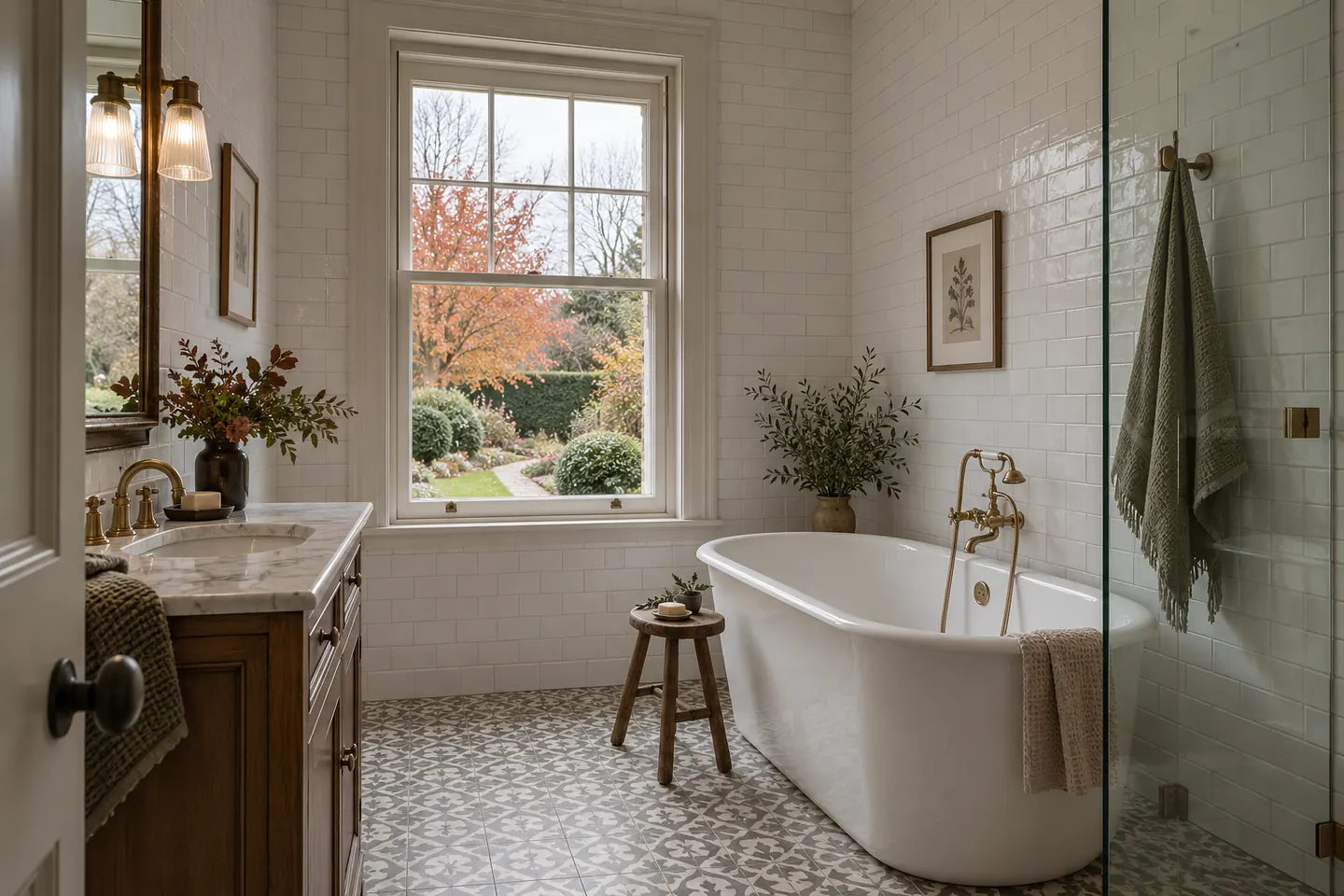
Old houses, old bathrooms
Bowral's established streets hold a large number of Federation, interwar and early post-war houses. They are a big part of why people want to live here. They also have bathrooms that were designed for a very different era — and usually renovated once, decades ago, without much attention to what was going on behind the tiles.
The result is a common pattern. The bathroom looks tired but serviceable. Open it up, and there is no working membrane, the framing around the shower has been wet for years, and if the house is on a timber floor the joists underneath have suffered.
None of that is a reason not to renovate. It is a reason to quote honestly.
What we check at the measure
The subfloor. Many older Bowral houses sit on piers with a crawl space. Where there is access we look under the bathroom with a torch. Damp, dark or soft timber directly under the shower tells us what the repair allowance needs to be.
The walls. Lath and plaster, double brick, render over masonry, or later fibre cement sheeting each change how the room is stripped and relined. Where the house or a past renovation dates from before about 1990, sheeting is tested for asbestos before the price is final.
The pipes. Galvanised steel supply pipes in older houses corrode from the inside, reduce pressure and eventually leak. If the walls are open, replacing them is sensible.
The window. Older bathrooms often have a timber sash window inside the shower zone. That is a waterproofing problem and, in a cold climate, a condensation one. Moving the shower away from it, or detailing the window reveal properly, is part of the design.
Heritage — what actually applies
Being in a heritage conservation area mainly affects what can be seen from the street — roofs, fences, facades, windows facing the road. Internal bathroom work is generally not affected.
A house that is itself a listed heritage item in the Wingecarribee LEP is different. Internal alterations to a listed item can need consent. It is worth checking the listing before planning anything that removes original fabric, such as a wall or a fireplace.
If you are not sure which applies, we will check before the design goes any further.
Keeping the character
An older Bowral bathroom does not need to become a museum piece, and it should not look like a city apartment either. The best results use traditional forms with modern performance:
- Encaustic-look or hexagonal mosaic floor tiles.
- Subway or handmade-look tiles on the walls, laid full height.
- A furniture-style or shaker vanity in timber or a painted finish.
- Brass, bronze or aged-nickel tapware.
- A freestanding bath where the room is large enough.
Behind all of that: new framing where needed, a proper membrane, underfloor heating and a ducted exhaust fan.
Warmth
Bowral winters are cold, and older houses are rarely well insulated. A bathroom on a timber floor with an external wall is often the coldest room in the house. Underfloor heating, a heated towel rail on a timer and a good exhaust fan make it a room people want to be in through July.
What it costs
A main bathroom in an older Bowral house typically runs $30,000–$45,000 once framing and subfloor repairs are allowed for. A newer house with a sound floor sits lower, around $26,000–$38,000. See the full 2026 cost bands.
Nearby
We also work in Burradoo, Mittagong, Moss Vale and Bundanoon, plus Berrima, East Bowral and Renwick.
Call 02 4210 5289 or send the room details through.
Questions people ask before they commit
My Bowral house is in a heritage conservation area. Does that affect a bathroom renovation?
Generally not for internal work. Heritage conservation areas mainly control what is visible from the street. The case that needs checking is a house that is itself a listed heritage item in the Wingecarribee Local Environmental Plan, where internal alterations can require consent. If a window or external wall is changing, the conservation area can matter too.
What is usually found when an old Bowral bathroom is opened up?
Most commonly: no functional waterproofing, water-damaged framing around the shower, soft or damaged joists underneath if the floor is timber, and old galvanised or copper pipework at the end of its life. In houses renovated in the 1960s to 1980s, asbestos cement sheeting behind tiles is also possible.
Can I keep the period character?
Yes, and it usually improves the result. Encaustic-look floor tiles, subway walls in a traditional bond, a furniture-style vanity and brass or bronze tapware all belong in an older Bowral house while everything behind them is brand new.
How long does a renovation take in an older house?
Allow four to five weeks for a main bathroom. The extra time over a newer house is mostly repairs to framing or subfloor, which are found once the room is open.